By Rıza Yılmaz, İmesta Food IT3 min read
Türkiye does not grow cocoa, but it imports and processes it, and its ports have direct shipping routes to the Middle East, the Gulf, Africa and the CIS. For a buyer, sourcing from a Turkish processor raises practical questions: how sampling works, which documents to expect, how long an order takes and what fits in a container. This guide answers them, using İmesta Food’s own figures.
About the supply chain
- Origin: beans from Ghana and Côte d’Ivoire.
- Processing: roasting, alkalization, pressing, milling and packing in Türkiye.
- Capacity: around 12,000 tonnes a year.
- Markets: the Middle East and North Africa, the Gulf, Africa and the CIS, with exports to more than 40 countries.
- In business since: 2002.
Step 1: a sample matched to your specification
A good sample request describes the product, not only the cocoa. Give:
- Your application: chocolate, bakery, drinks, dairy or cosmetics.
- Target pH or colour: ideally with a reference sample if you are replacing an existing cocoa.
- Fat content: usually 10–12 % for powder.
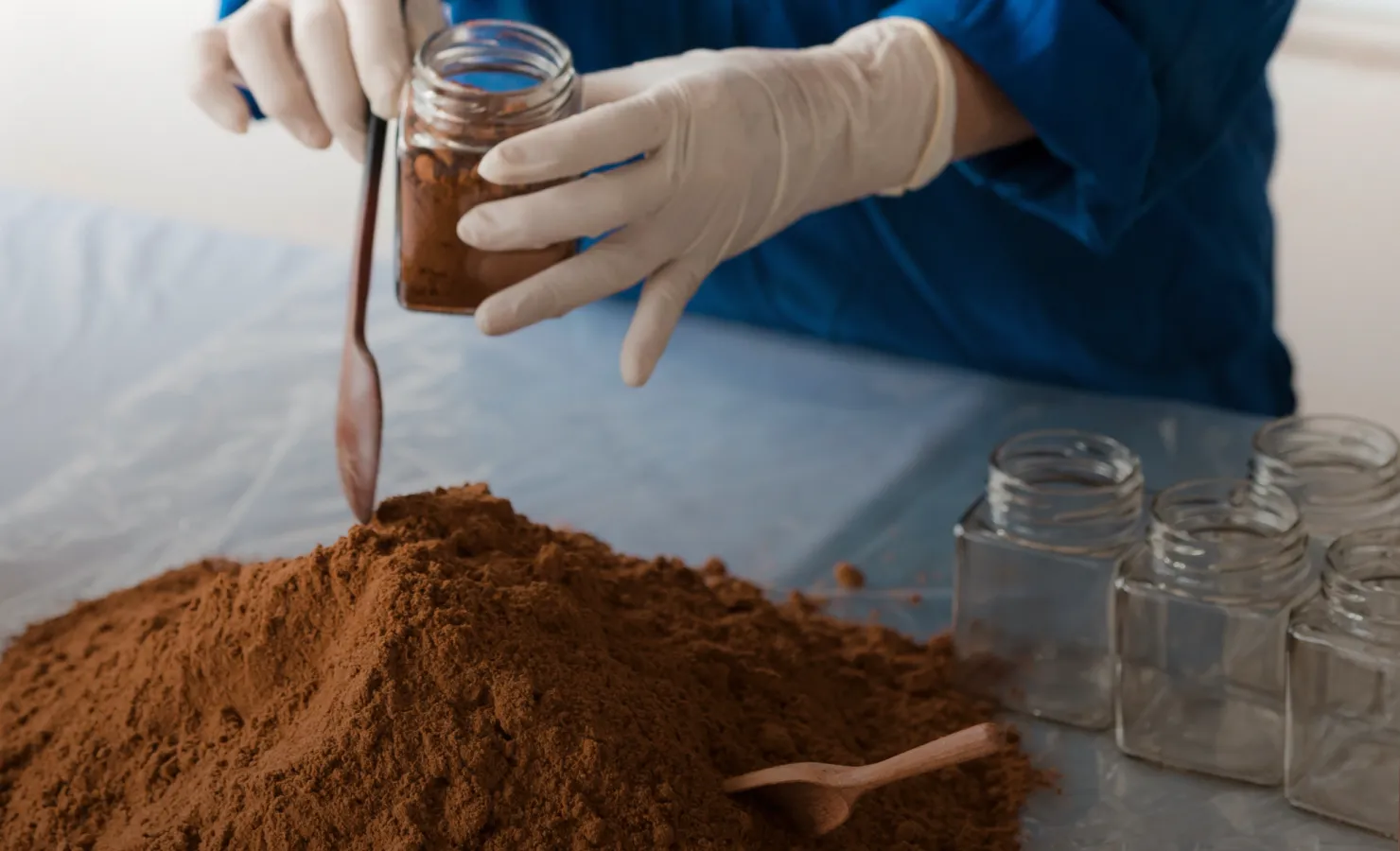
The supplier then matches a grade from stock or from the next production run and ships the sample with its technical data sheet in the box. Test it in your own recipe before discussing volume.
Step 2: the documents that travel with an order
| Document | What it gives you |
|---|---|
| Technical data sheet | The range each value is held to for the grade |
| Certificate of analysis | Measured values for your specific lot |
| Certificates | Food safety, quality and dietary certificates of the plant |
| Allergen and dietary statement | What runs in the plant, for your label and audit file |
| Origin declaration | Country of harvest and of processing, for customs |
| Packing and loading sheet | Bag, net weight, tonnage per container, shelf life, storage |
The plant’s certificates include FSSC 22000, ISO 22000, ISO 9001, HACCP, HALAL and KOSHER. For buyers in the Gulf and Central Asia, HALAL certification is usually a condition of entry.
Step 3: packing and container loads
| Cocoa powder | Cocoa butter and liquor | |
|---|---|---|
| Pack | 25 kg net, poly-lined kraft paper bag | 25 kg net, poly-lined corrugated carton |
| 20-foot container | 15 t, 600 bags | 20 t, 800 cartons |
| 40-foot container | 26–28 t, 1040–1120 bags | — |
| Shelf life | 24 months | 24 months |
Tonnage per container is subject to liner and port regulations.
Step 4: lead time and loading
Orders are loaded at Ambarlı, Istanbul, one of Türkiye’s main container ports. The average time from order to loading is 21 days. Transit time after that depends on your destination port and the shipping line.
Questions worth asking any supplier
- Can you send a certificate of analysis from a recent real lot, not only a data sheet?
- Which certificates cover the plant that actually produces my grade?
- How do you keep colour consistent between deliveries?
- What is the average time from order to loading, and from which port?
Start with a sample request, see every document on the documents page, check certificates on the quality page, or reach our export team through the contact page.
Frequently asked questions
Where do Turkish cocoa suppliers source their beans?
Türkiye does not grow cocoa; beans are imported and processed locally. İmesta Food's beans come from Ghana and Côte d'Ivoire and are processed in Türkiye.
How long does a cocoa powder order take to load?
At İmesta Food, the average time from order to loading at Ambarlı, Istanbul, is 21 days. Transit time depends on the destination port.
How much cocoa powder fits in a container?
In 25 kg bags, about 15 tonnes (600 bags) in a 20-foot container and 26–28 tonnes (1040–1120 bags) in a 40-foot container, subject to liner and port rules.
Is Turkish cocoa powder halal certified?
It depends on the supplier. İmesta Food's plant holds HALAL and KOSHER certificates alongside FSSC 22000, HACCP and ISO management system certificates.
What documents come with a cocoa powder shipment?
Typically the technical data sheet, the certificate of analysis for the lot, the plant's certificates, an allergen and dietary statement, an origin declaration and a packing and loading sheet.